
Can I Travel With Heart Failure? What Do I Need To Know?
Can I Travel With Heart Failure? What Do I Need to Know?
By Dr Jodie-Ann Senior | Cardiologist & Heart Failure Specialist
You've got a trip planned. Or maybe you're just thinking about one. And underneath the excitement, there's a quiet worry — can I actually do this safely?
Here's what I see most often in clinic. Patients either cancel their travel plans entirely, or they go ahead with no real preparation and hope for the best. Both of those responses miss the point.
For the great majority of people with stable heart failure, travel is genuinely possible. What's usually missing isn't permission — it's a system. Let's build one.
Can You Travel? The Honest Answer

For most people with stable heart failure — meaning your symptoms are reasonably controlled, your medications are settled, and you haven't had a recent hospital admission — the answer is yes. Heart failure itself is not, in most cases, an automatic barrier to travel.
But it's worth having a specific conversation with your cardiologist or heart failure nurse before booking anything significant, particularly long-haul flights, remote destinations, or travel involving major altitude change. Ask a specific question: given my current stage, symptoms, and medications, is there anything about this particular trip I should be cautious about?
That's a far more useful conversation than a general 'is it okay to travel' — and it gives you something concrete to act on.
The Heart Failure Travel Folder
You wouldn't travel without your passport. I want you to give your heart failure travel folder the same non-negotiable status — physical or digital, going everywhere your passport goes.

Flying Safely With Heart Failure
For patients with stable heart failure, commercial flights are generally well tolerated. Cabin pressure is regulated to a moderate altitude equivalent, and most people manage this without difficulty.
•Move regularly — walk the aisle every hour or two, or at minimum flex your ankles and calves while seated, to reduce clot risk
•Watch your fluid and salt intake during the flight the same way you would at home — cabin air is dry, but airline meals are often high in sodium
•Keep medications in your carry-on bag, never in checked luggage
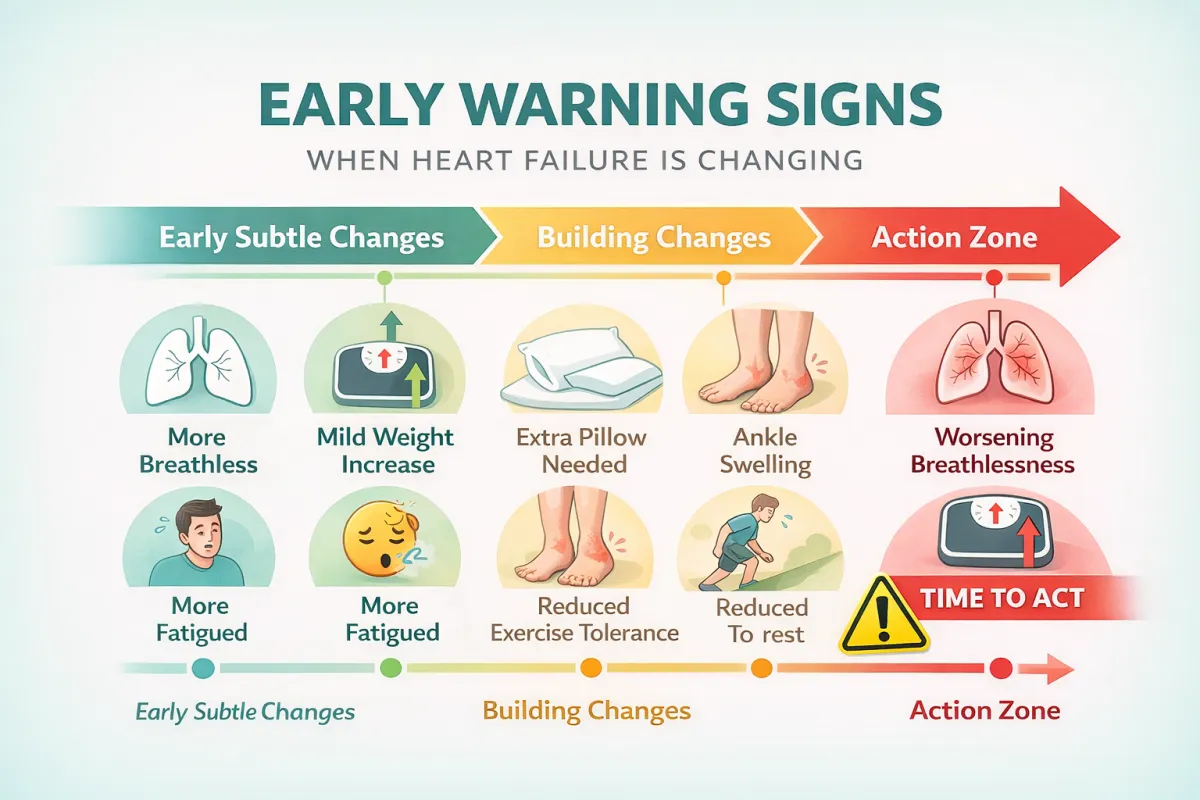
•Build in buffer time at airports — rushing and carrying heavy luggage can push you toward your Moderate or Stop zone unexpectedly. Use luggage trolleys and airport assistance where offered
When to Seek Individual Advice
If you're travelling somewhere with limited medical infrastructure, or planning a trip involving significant altitude change, that warrants an individual conversation with your cardiologist beforehand. These situations benefit from specific, personalised assessment rather than general guidance.
For the great majority of travel — visiting family, a holiday, a short domestic trip — stable heart failure with proper preparation is simply not the barrier it can feel like.
One Action to Take Today
Start building your travel folder today — even without a trip booked. Medication list with generic names. Care team contact details and a one-page condition summary. A printed Four Zones™ plan. Insurance confirmation once you have a trip in mind.
Build it now, before you need it in a hurry two days before a flight. Keep it with your passport. Treat it with the same seriousness.
Travel with heart failure isn't about whether you're allowed to live your life — in almost every case, you are. It's about having a proper system in place, so that when the opportunity comes, you can say yes with confidence.
📋 Free downloads:
💚 Heart Failure Tracking Kit (includes The Four Zones™ — printable for your travel folder): https://www.hftk.drjodieannsenior.com
📄 My Heart Failure Stage — Personal Reference Guide: https://www.hfsg.drjodieannsenior.com
▶️ Watch the video version:
📖 More: drjodieannsenior.com/blog
Aligned with the NHFA/CSANZ 2018 Guidelines for the Prevention, Detection and Management of Heart Failure in Australia.
This article is for educational purposes only. Always consult your own healthcare team before travelling, particularly for long-haul flights, remote destinations, or significant altitude changes.
Heart Failure Help Now|drjodieannsenior.com|Dr Jodie-Ann Senior, Heart Failure Specialist