
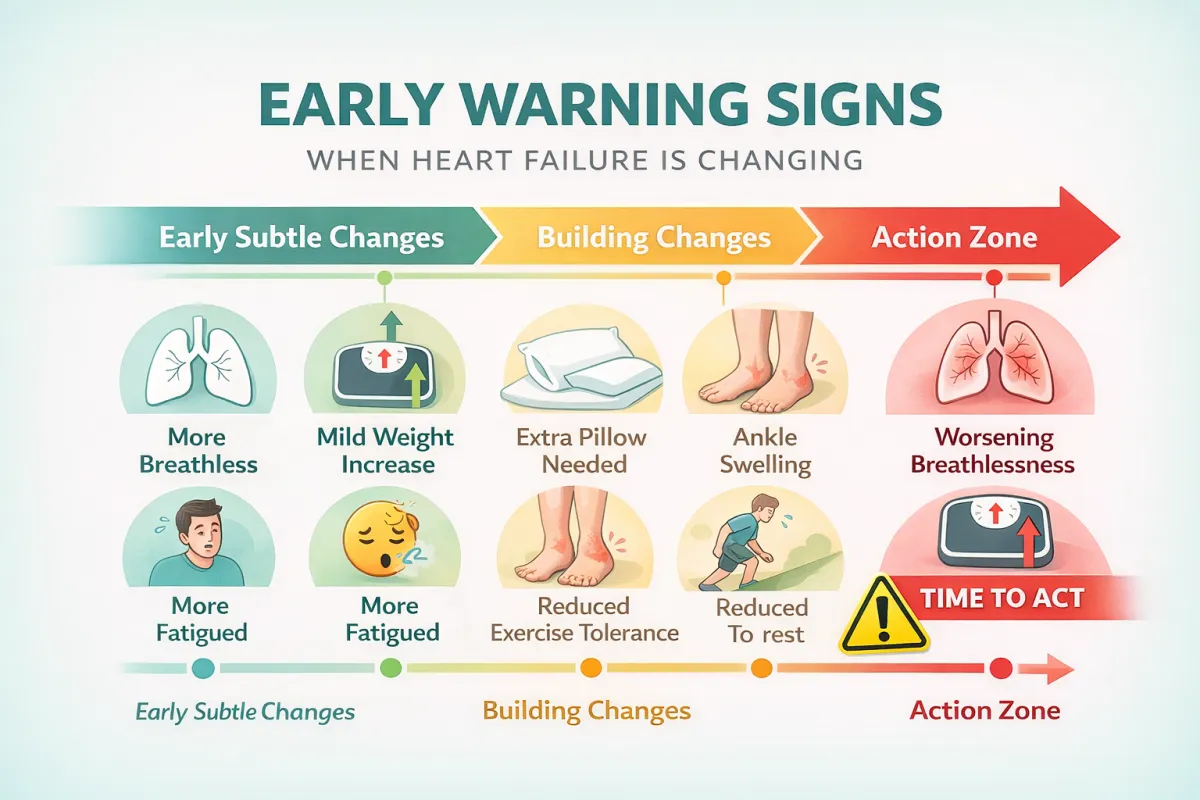
My Heart Failure Is Stable- Why Do I Still Feel So Unwell?
My Heart Failure Is Stable — So Why Do I Still Feel So Unwell?
By Dr Jodie-Ann Senior | Cardiologist & Heart Failure Specialist
Your doctor looked at your results, looked at your scans, and told you that you're stable. You nodded, because that's meant to be good news.
But you don't feel stable. You feel exhausted. Breathless doing things that used to be easy. Some days, genuinely awful. There's a quiet, confusing gap between what you were told and what you're actually experiencing — and maybe you've started to wonder if you're imagining it, or not coping the way you should be.
You are not imagining it. This is one of the most important, and most under-discussed, conversations in heart failure care.
The Core Confusion
When your cardiologist says you're stable, they're making a very specific, narrow clinical statement. It means your heart failure hasn't recently worsened. It means you haven't needed hospitalisation. It means your blood tests, weight, and scans sit within an expected range for your condition. Your risk of a dangerous event right now is lower than if things were actively deteriorating.
That's genuinely good and important information. But notice what it doesn't address: your energy levels, your breathlessness during daily activities, your mood, your sleep, your capacity to do the things that matter to you. Stable, in the clinical sense, is a measurement of danger — not a measurement of wellness.
The Aeroplane on the Runway
Think about an aeroplane that's landed safely and is sitting on the runway. The pilot can accurately say the plane is stable. Engines aren't failing. No emergency. Nothing dangerous is happening.
But that tells you nothing about whether the passengers are comfortable. Whether they slept during the flight. Whether earlier turbulence left them nauseous and shaken. Whether they're cramped, uncomfortable, and desperate to disembark.
The plane being stable and the passengers feeling well are two completely different questions, measuring two entirely different things.
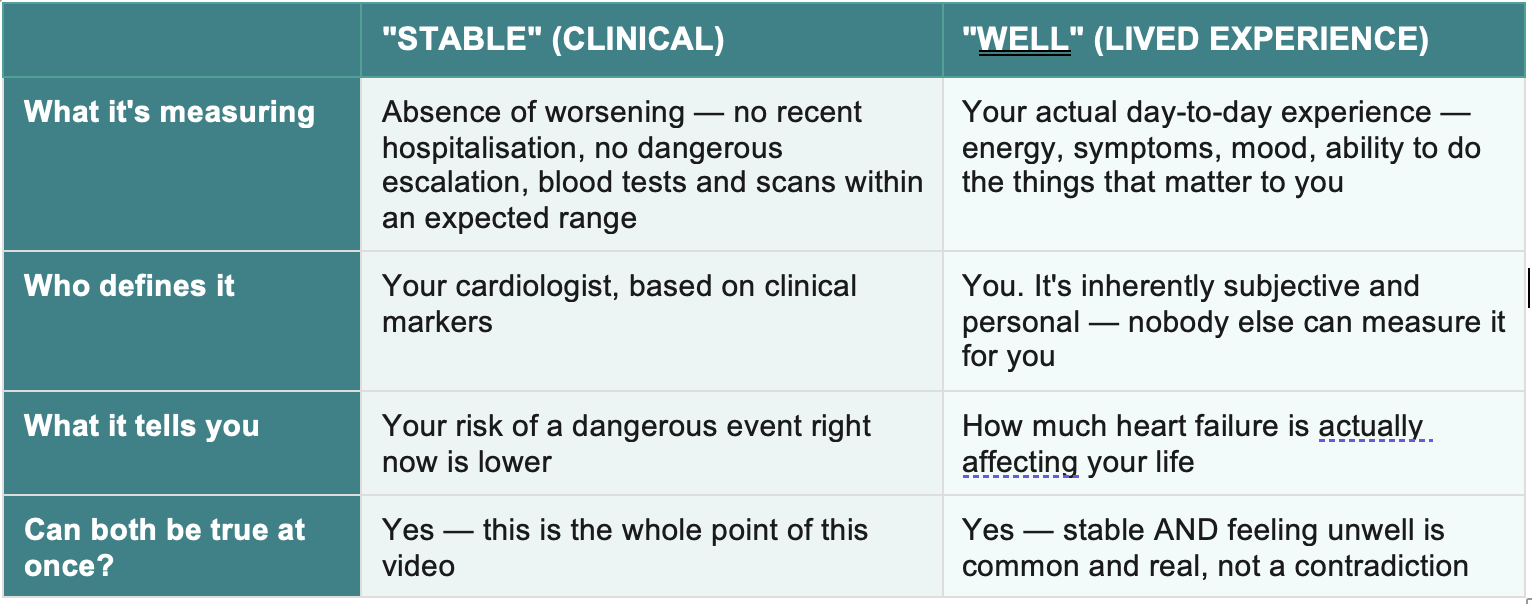
Your heart failure being stable is the plane sitting safely on the runway. How you actually feel day to day — your fatigue, your breathlessness, your quality of life — that's the passenger experience. Both can be true, completely independently of each other.
Why This Gap Happens So Often in Heart Failure
Heart failure frequently causes ongoing symptoms even when the underlying condition is not actively worsening. Fatigue, breathlessness on exertion, and reduced exercise capacity can persist as a baseline reality of living with a heart that isn't pumping at full capacity — even when that heart isn't getting worse. Stable doesn't mean symptom-free. It means not deteriorating.
Clinical appointments are also often short, structured around specific, measurable markers of danger — weight, blood pressure, scan results. There's often simply not time in a fifteen-minute appointment to properly explore the full texture of how you're experiencing daily life.
And patients often don't feel they have permission to raise quality-of-life concerns once reassured they're stable. It can feel like complaining when you've just been told good news. So the conversation moves on, and the ongoing impact on your daily life goes unaddressed.
You're Allowed to Hold Both Truths
Being stable and still needing support for how you actually feel are not in conflict. You are allowed to hold both of these truths, and to say so directly to your care team. |
The One Question to Ask at Your Next Appointment
"Given that I'm stable, what else can we do about how I actually feel day to day?" |
This question opens up a genuinely different conversation. It might lead to a discussion about whether your medication doses are optimised, not just safe. It might raise cardiac rehabilitation, specifically designed to improve quality of life and exercise tolerance, separate from disease stability. It might surface other treatable contributors to your fatigue — sleep, anaemia, mood. Or it might simply mean your care team hears clearly that stability alone isn't the whole goal for you.
A Final Word
Being told you're stable is real, important, good information. It means your heart failure isn't actively getting worse, and your risk of a dangerous event right now is lower. But it says nothing about how you're actually experiencing each day.
Both of those things can be true for you simultaneously, and neither cancels out the other. You are allowed to feel unwell and be stable at the same time. And you are allowed to ask for more than stability.
If you are looking for a community that supports and guides you, considering joining members.drjodieannsenior.com/heart_collective_1
📋 Free downloads: 💚 Heart Failure Tracking Kit (includes The Four Zones™ + The Talk-Test Method™): https://www.hftk.drjodieannsenior.com 📄 My Heart Failure Stage — Personal Reference Guide: https://www.hfsg.drjodieannsenior.com ▶️ Watch the video version: 📖 More: drjodieannsenior.com/blog |
Aligned with the NHFA/CSANZ 2018 Guidelines for the Prevention, Detection and Management of Heart Failure in Australia.
This article is for educational purposes only. If you are struggling with your quality of life or mental health, please speak with your own healthcare team.
Heart Failure Help Now|drjodieannsenior.com|Dr Jodie-Ann Senior, Heart Failure Specialist