

My Ejection Fraction Is Normal. So How Can I Have Heart
My Ejection Fraction Is Normal. So How Can I Have Heart Failure?
By Dr Jodie-Ann Senior | Cardiologist & Heart Failure Specialist
It can sound like a contradiction: your ejection fraction (EF) is normal, yet you've been told you have heart failure. It isn't. This is one of the most common points of confusion in heart failure. This guide explains what EF measures, what heart failure with preserved ejection fraction (HFpEF) is, and what to ask.
What does ejection fraction measure?
Ejection fraction is not a score out of 100. It is the percentage of blood your heart ejects with each beat, and a normal heart sits at around 55 to 65 percent. It tells us how well the heart squeezes. But heart failure is not only about squeezing.
The pump-and-sponge picture
The heart has two jobs. It pumps blood out, and it relaxes so it can fill ip with blood up again before the next beat. In some people the squeeze is fine, but the heart has become stiff and thick. It cannot fill up with blood easily, so pressure backs up behind it into the lungs and legs. That causes breathlessness and swelling even when the pumping number looks normal.
What is HFpEF?
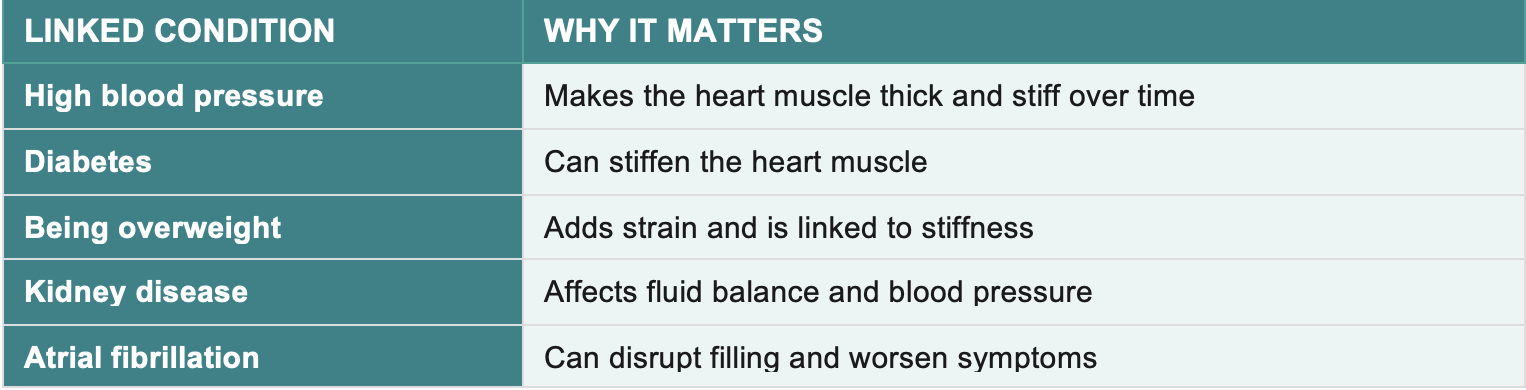
Heart failure with preserved ejection fraction (HFpEF) means the squeeze, as measured by EF, is normal or near normal while the heart is stiff and fills poorly. It is more common in older people and in women, and it is often linked to the conditions below.
A thick, stiff heart is often a smaller cup. It can eject a normal percentage of what's in it, but there is less in it to begin with, so each beat can move less blood than it should.
How is it diagnosed?

To diagnose HFpEF, we put together a clinical picture that is formulated from the symptoms like shortness of breath, fatigue, swelling in the feet or legs, then add the signs of heart failure such as crackles / noises we hear in the lungs, veins noticed more prominently in the neck and things like swelling in the body (feet, ankles, shins). We then look at the tests that help us determine that these symptoms (things you tell us) and signs (things we can see in your body) might come from the heart. Such tests include a blood test called a Brain Natriuretic Peptide, and an ultrasound of the heart called an Echocardiogram.
Preserved does not mean mild
HFpEF can be just as limiting and serious as other types of heart failure. Treatment includes managing the drivers (blood pressure, atrial fibrillation, weight, diabetes and sleep apnoea), fluid tablets to relieve congestion, staying active, and SGLT2 inhibitors, which trials have shown can reduce the chance of hospital admission in people with preserved EF.
The one question to ask
At your next appointment, ask: “Do I have heart failure with preserved ejection fraction, what is driving it in me, and am I on the right treatment?”
The bottom line
A normal EF means one test is normal. It doesn't mean the heart is. Your EF is a snapshot, not a verdict.
📋 Free downloads: 📋 Heart Failure Stage Guide (free): https://www.hfsg.drjodieannsenior.com 📋 Heart Failure Tracking Kit (free): https://www.hftk.drjodieannsenior.com ▶️ Watch the video version: 📖 More: drjodieannsenior.com/blog |
Aligned with the NHFA/CSANZ 2018 Guidelines for the Prevention, Detection and Management of Heart Failure in Australia.
This article is general education and not a substitute for personal medical advice.
Heart Failure Help Now|drjodieannsenior.com|Dr Jodie-Ann Senior, Heart Failure Specialist