
How To Recognise When Heart Failure Is Getting Worse
How to Recognise When Heart Failure Is Getting Worse
One of the most important parts of managing heart failure is recognising when something is changing. This is the thing that I teach ALL my heart failure patients - when to escalate. Why? Because knowing this will keep you out of hospital and out of trouble.
Often, those changes are subtle at first.
And the earlier they are recognised, the easier they are to manage.
I often see this play out in fairly consistent ways.
Someone might say:
“I’ve just been a bit more short of breath this week… I thought I was just having an off few days.”
Or:
“I’ve put on a bit of weight, but I assumed it was the food I ate.”
And what’s happened is that the changes have been gradual.
A little more breathless walking up a slope.
A bit more tired doing everyday things.
Maybe needing an extra pillow at night.
Nothing dramatic.
But over several days, those small changes start to add up.
And that’s usually where heart failure is beginning to shift.
Early Signs to Watch For
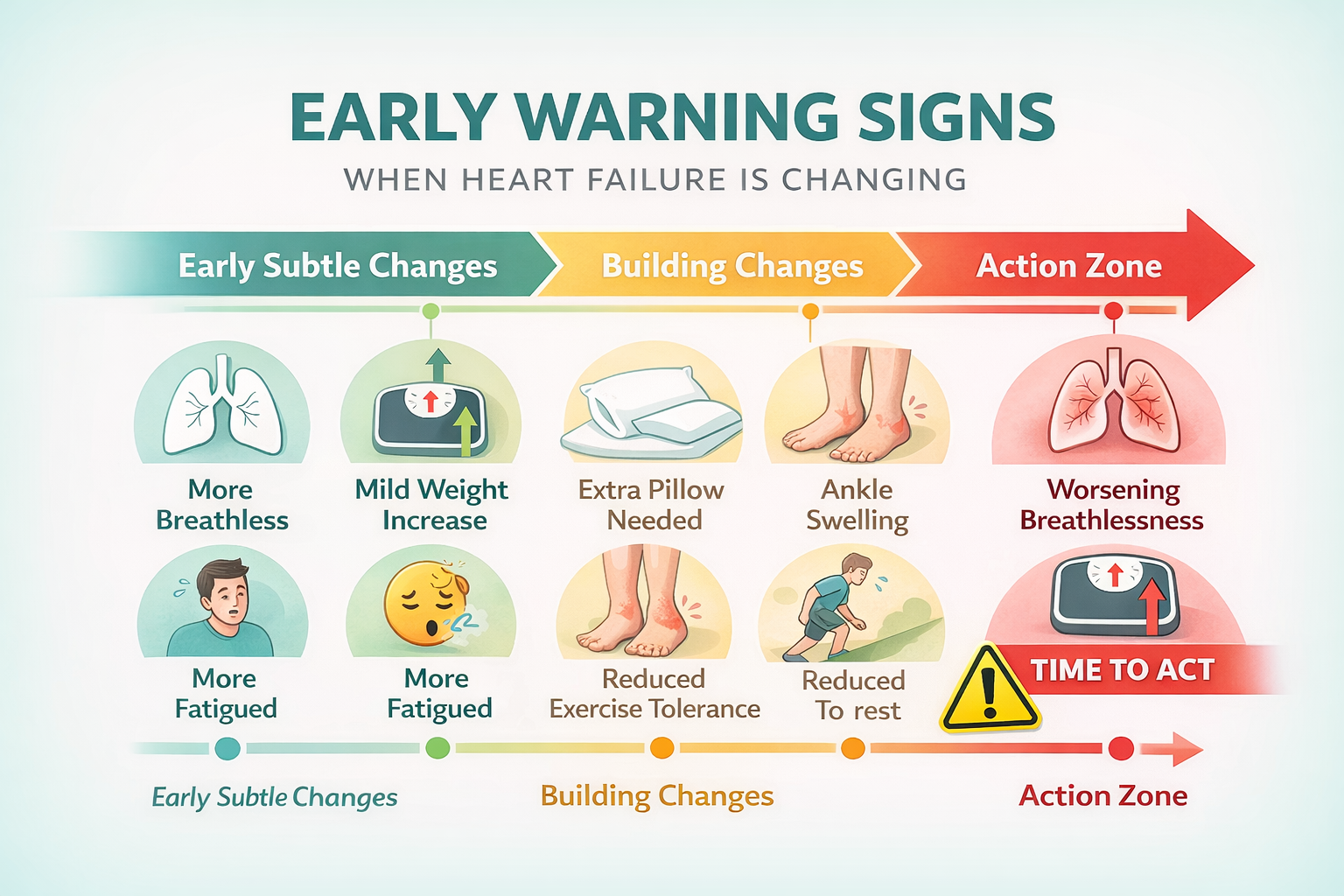
Common early changes include:
• increasing breathlessness
• reduced exercise tolerance
• swelling in the legs or ankles
• unexpected weight gain
• needing more pillows at night
These changes are often dismissed at first — especially if they develop gradually. It's not until they become more impressive and cause serious difficulty that the alarm bells are raised.
Why These Changes Matter
These symptoms often reflect increasing pressure and fluid build-up.
They don’t necessarily mean something serious has suddenly happened.
But they are signals that the balance is changing — and that things may need attention.
Acting Early Makes a Difference
Many hospital admissions for heart failure don’t begin suddenly.
They often follow several days, weeks or even months of gradual change.
And when those changes are recognised early, treatment can often be adjusted before things escalate.
This might mean:
• adjusting medications
• addressing fluid build-up
• reviewing your overall management
Small changes early can prevent much bigger problems later.
A Practical Habit That Helps
One of the most useful habits is daily awareness.
This doesn’t mean constantly worrying — but simply noticing, monitoring and recording patterns.
For example:
Has your weight changed over a few days? (Measure it and record it daily).
Are you more breathless than usual. (Use a symptom tracker - find my FREE heart failure tracker kit here..... 👉🏻 hftk.drjodieannsenior.com )
Are everyday activities feeling harder? (Journal it for your doctor and take it to appointments).
These are often the earliest signals.
Knowing When to Seek Help
It’s important to know when to contact your doctor.
Particularly if you notice:
• rapid weight gain (over a few days)
• worsening breathlessness
• new or increasing swelling
• needing to sit upright to breathe comfortably (sitting up to sleep is a serious sign)
If symptoms are more severe or sudden, urgent medical attention may be needed.
The Bigger Picture
Recognising change early is one of the most empowering aspects of managing heart failure.
It shifts you from reacting to problems → to anticipating them.
And that can make a very meaningful difference to how stable things feel over time.
Watch: Recognising Early Changes
If you prefer to hear this explained step-by-step, I’ve also talked through this in a short video below.
You’re Not Alone in This
If you’ve found this helpful, you’re not alone in trying to make sense of all of this.
I share simple, practical guidance on heart failure — the kind of information I wish every patient had from the beginning.
You’re very welcome to join if that would be helpful.