What Should I Eat With Heart Failure and What Should I Avoid?
What Should I Eat With Heart Failure? And What Should I Avoid?
By Dr Jodie-Ann Senior | Cardiologist & Heart Failure Specialist
You've been told to watch your salt. Maybe you've stopped adding it at the table.
If that's the only change you've made, you've missed most of the problem — and I say that not to make you feel bad, but because this is one of the most poorly explained parts of heart failure care, and it matters enormously.
Let's talk about where sodium is really hiding, why it matters as much as it does, and what a realistic, enjoyable way of eating actually looks like.
Why the Salt Shaker Isn't the Real Problem
The salt shaker on your table accounts for a small fraction of most people's total sodium intake. The real source, for almost everyone, is processed and packaged food — bread, canned soup, deli meat, sauces, frozen meals, cheese. Foods that you don’t make are often the real problem. This includes the takeaway and restaurant options where there may be a lot of hidden salt and sugar in the foods and drinks you consume.
These foods carry sodium levels that are easy to underestimate, because the food doesn't necessarily taste salty. A slice of bread doesn't taste like a salty food. But across a day of normal eating, these hidden sources add up to far more sodium than anything you'd ever add with a shaker.
Why Sodium Matters So Much in Heart Failure
Sodium doesn't just affect blood pressure. It directly affects how much fluid your body retains — wherever sodium goes, water follows it. That's basic physiology.
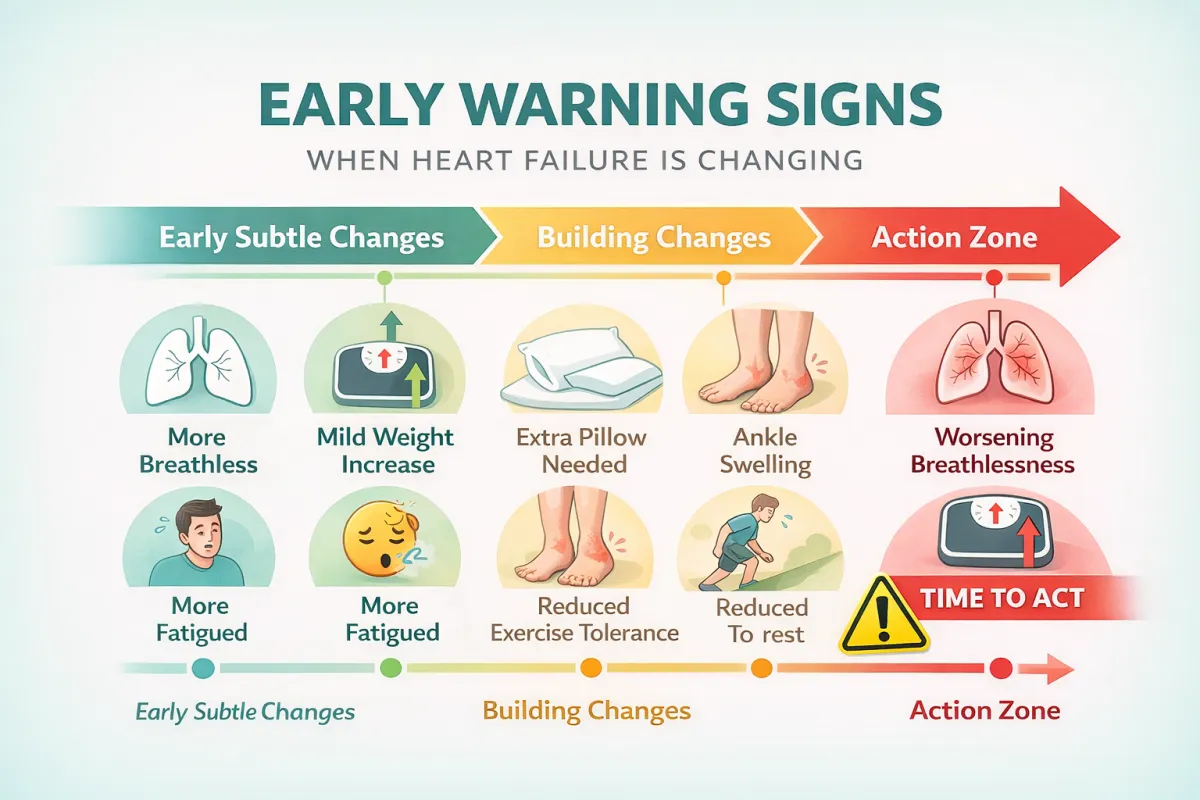
In a healthy heart, the kidneys manage that balance between salt and water retained in the body, very efficiently. In heart failure, that regulation is already under strain. Extra sodium means extra fluid retention. Extra fluid retention means more work for a heart that's already struggling — and it shows up as swelling, breathlessness, and weight gain, exactly the signals we track in The Four Zones™.
This is why sodium management matters so much more in heart failure than it does for the general population, and why 'just don't add salt at the table' is nowhere near enough guidance.
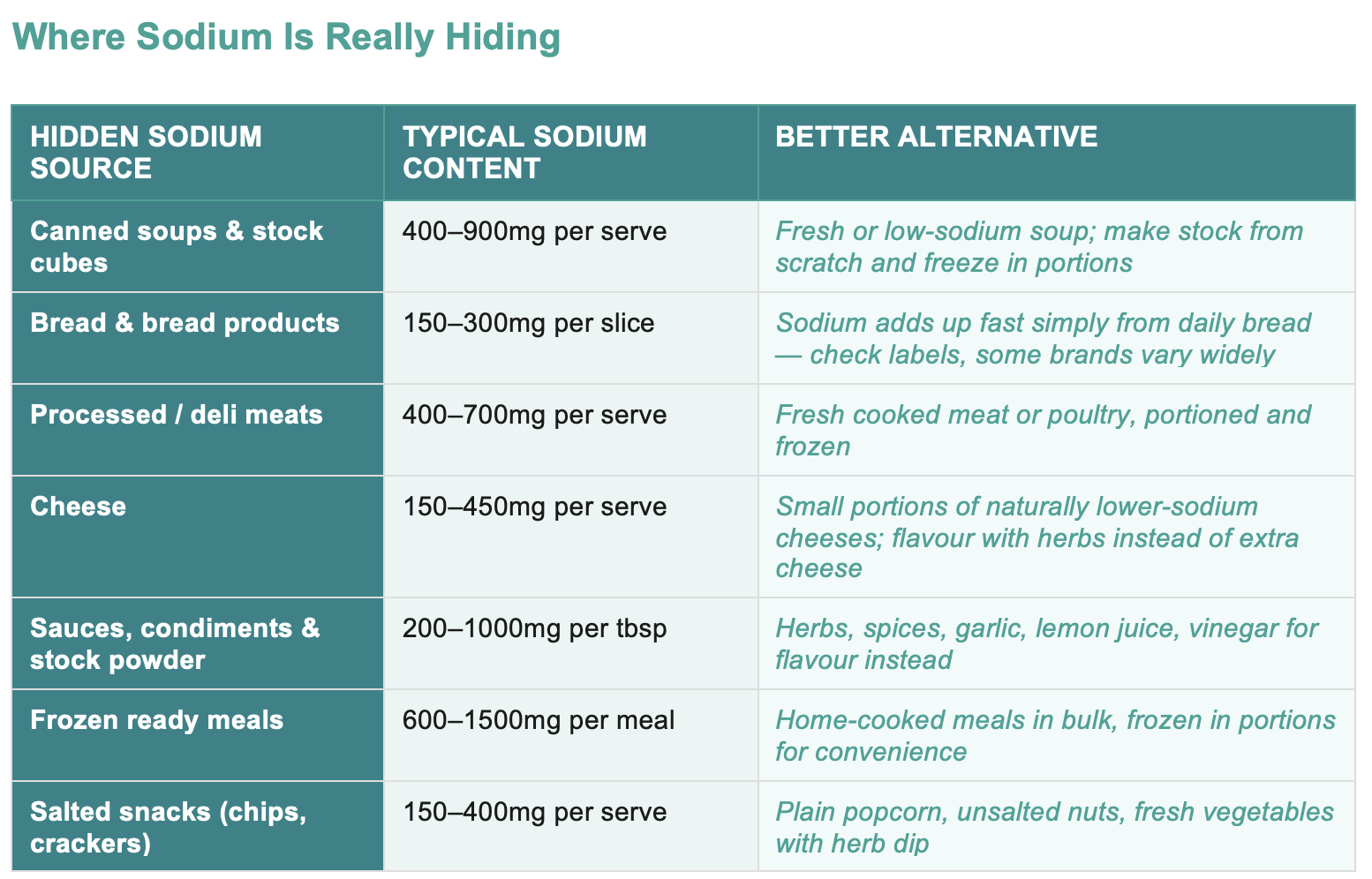
Most heart failure guidelines recommend somewhere around 2,000mg of sodium a day or less — but your specific target may differ, and it's worth confirming with your own care team or dietitian.
The One Habit That Matters More Than Any Food List
You already know how to check a nutrition label for calories, sugar, or fat. Add one more number to that habit: sodium, measured in milligrams.
The skill isn't memorising a list of banned foods — it's the habit of turning the packet over and checking that one number before it goes in your trolley or onto your plate. This single habit will do more for your sodium intake over time than any restrictive list ever could. As you see how much salt is hidden in food, it is likely to change the choices you make. What we track or measure we can manage.
BUT
Let me add this. It’s much easier if you don’t have to check labels… right? Yes. So how would we do this, and stay inside an acceptable salt intake?
Eat real food. Yes that’s right… “What” you say? I already eat real food. Don’t I? Well… maybe you do. But if you are eating ultra processed foods, you’d be surprised how little of that would actually be what we would consider food. For example, those cheese slices packed individually in single plastic wraps don’t technically contain enough actual cheese to be called “cheese”. If you bought cheese from a deli that is small batch cultured directly from milk, the old fashioned way, then that’s cheese. My point? Eat food that is recognisable as it came from a farm, or from the sea, or from a paddock or off a tree. It doesn’t have a label if you got it at the butcher or from the market or greengrocer. These will generally be the lowest salt foods you could find. In nature, the salt is lower in content. And it’s much harder to get into trouble eating real food. Learn to cook. It will help enormously if you have control over what you are eating on the daily. Of course it’s ok to eat out every now and then. And yes, frozen peas might be fine, or any other single ingredient food in a packet. However, mind things in brine or tins that might have a higher salt content.
Fluid Restriction — Explained Properly
If sodium pulls fluid in, how much you drink matters too. And this isn't just water — tea, coffee, soup, juice, even ice cream and jelly all count toward your daily fluid intake.
Most heart failure patients are given a personal daily fluid limit — often somewhere between 1.5 and 2 litres, though this varies and should be set by your own care team based on your specific situation. If you don't know your number, ask at your next appointment. It's an entirely reasonable question, and one that's often not clearly answered.

What You Should Actually Be Eating
Let's make this positive rather than restrictive.
•Fresh vegetables and fruit
•Fresh or frozen meat, poultry, and fish, cooked without added salt
•Herbs, spices, garlic, lemon juice, and vinegar for flavour instead of salt-based sauces and stock
•Plain rice, pasta, and potatoes rather than pre-seasoned or instant versions
•Homemade meals cooked in bulk and frozen in individual portions — so convenience doesn't mean high sodium
This isn't a bland, joyless way of eating. It's a way of eating where you're back in control of what's actually going into your body — a very different thing to being handed a list of foods you're no longer allowed to enjoy.
One Action to Take Today
The next packaged food you're about to eat — whatever it is — turn it over and check the sodium content before you eat it. Just look at the number.
You don't have to change anything yet. Just look.
That one small action starts building the habit that matters more than any food list. Once you start looking, you start noticing. And once you start noticing, you start making different choices naturally — not because you're following a rigid set of rules, but because you can actually see what you're consuming.
Salt at the table was never the real problem. What's hiding in your pantry and your freezer is where the real opportunity is — and now you know exactly what to look for.
📋 Free downloads:
💚 Heart Failure Tracking Kit (includes fluid limit tracker + daily weigh-in diary): https://www.hftk.drjodieannsenior.com
📄 My Heart Failure Stage — Personal Reference Guide: https://www.hfsg.drjodieannsenior.com
▶️ Watch the video version:
📖 More: drjodieannsenior.com/blog
Aligned with the NHFA/CSANZ 2018 Guidelines for the Prevention, Detection and Management of Heart Failure in Australia.
This article is for educational purposes only. Sodium and fluid targets vary by individual — always confirm your personal targets with your own healthcare team or dietitian.
Heart Failure Help Now|drjodieannsenior.com|Dr Jodie-Ann Senior, Heart Failure Specialist