
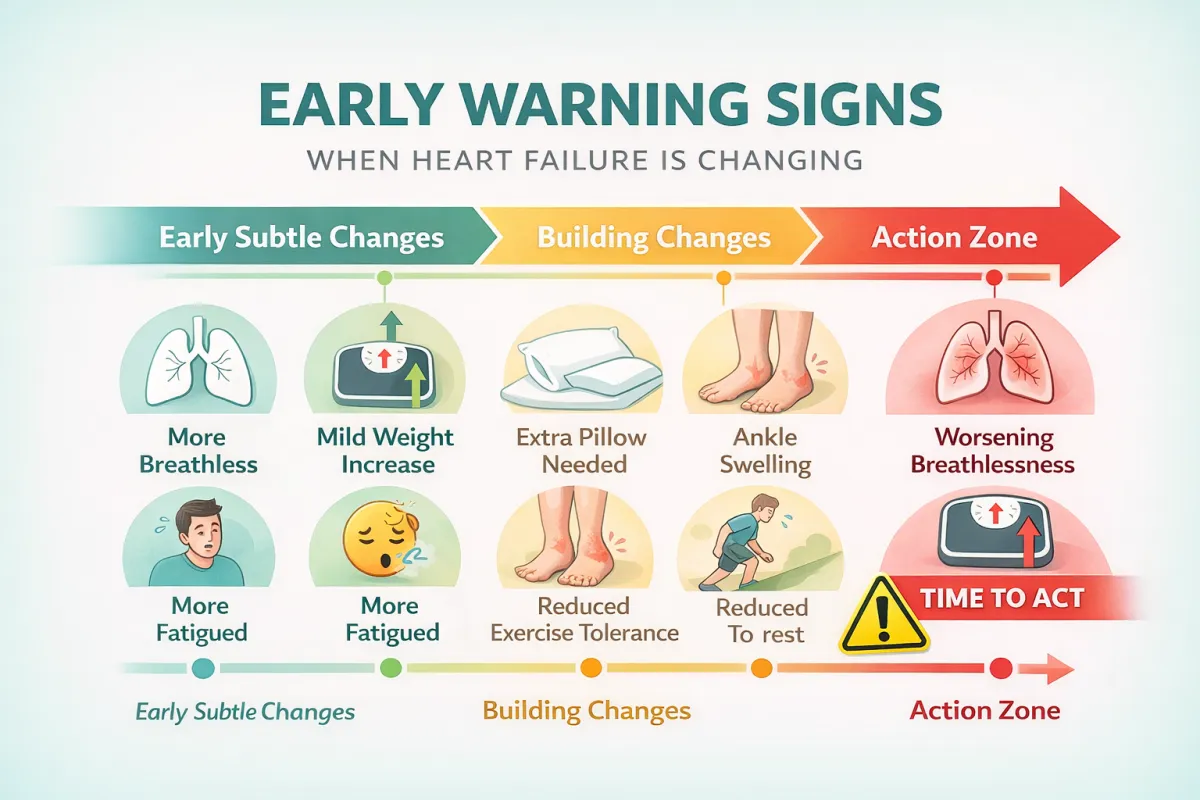
Grieving the Life You Had Before Heart Failure: What It Is and What Helps
I Miss Who I Was Before Heart Failure. Is That Grief?
By Dr Jodie-Ann Senior | Cardiologist & Heart Failure Specialist
If you've ever thought, I miss who I was before heart failure, you are not being self-indulgent. You may be grieving. Heart failure takes things from people that nobody holds a funeral for, and that grief often goes unspoken. This article names it, explains how it differs from depression, and suggests what can help.
Grief can be especially hard for those who are grieving, but it doesn't look like the usual.... the acknowledged grief that comes when you lose a person you love and care about.
But what happens when the person you lose is you?

This is also grief, but it's something you may suffer and nobody will acknowledge that loss or that suffering. You might have a sense of loss around who you were, what you used to be able to do, how you felt before all this happened and especially what you might have lost in terms of who you might have become. This all runs alongside the loss of function - physically, mentally and in other aspects of your well-being.
What are people grieving?
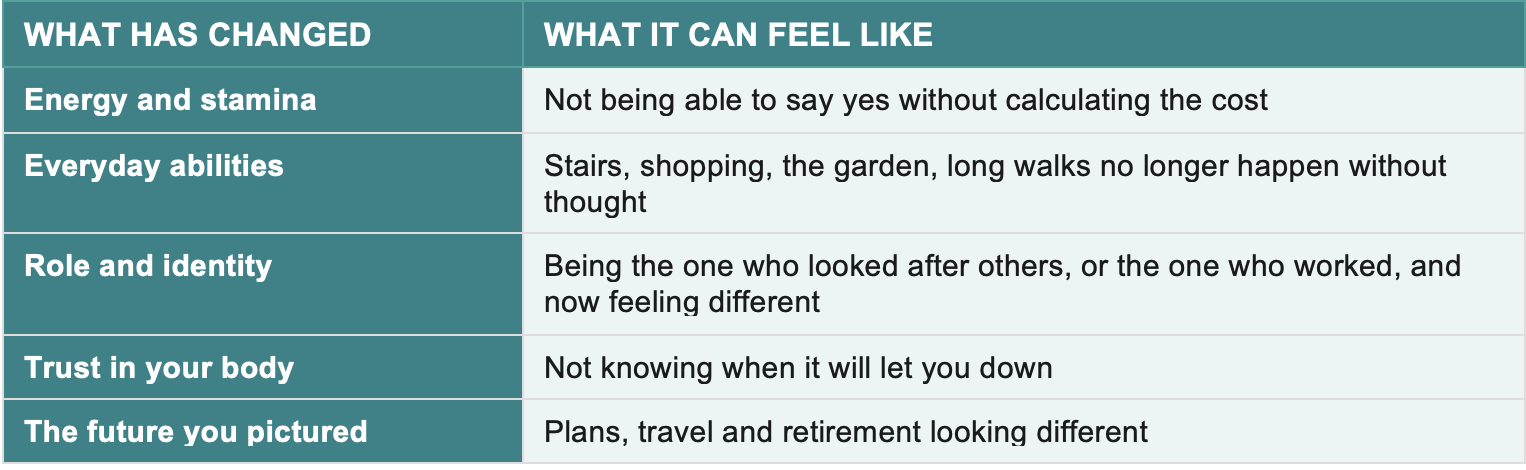
Grief that isn't acknowledged
Researchers use several terms for this kind of loss. Disenfranchised grief (a term associated with Kenneth Doka) describes grief that isn't openly acknowledged or socially recognised. Chronic sorrow (first described by Simon Olshansky, and since applied to chronic illness) describes grief that returns in waves as an illness continues. Ambiguous loss (associated with Pauline Boss) describes loss that has no clear ending. You don't need the labels, but it helps to know that what you feel is recognised, acknowledged and studied.
The country you didn't choose to move to
Imagine you've moved to another country without choosing to. The new place is fine, even good in places. But the language and the maps are different, and you have to relearn everything you used to do without thinking. You can be grateful for where you've landed and still miss home. Grief in heart failure often feels like this. You can be glad to be alive and still grieve the person and the life you left behind.
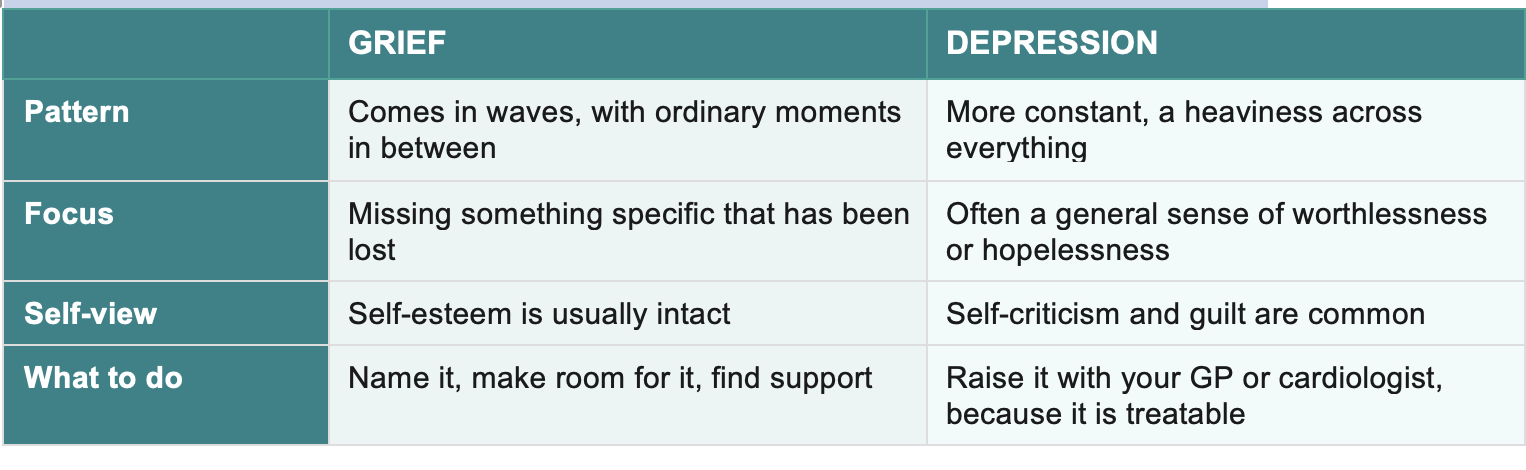
Grief or depression?
They can look similar and can happen together, so this is a general guide only.
Loved ones grieve too
Partners, children and friends often feel the loss quietly, afraid that saying so will upset you. Sometimes the kindest thing is to say it first.
If you are having thoughts of ending your life, please tell someone today. Australia: 000 in an emergency|Lifeline 13 11 14|Beyond Blue 1300 22 4636 United States: call or text 988|UK and Ireland: Samaritans 116 123 |
The one thing to do
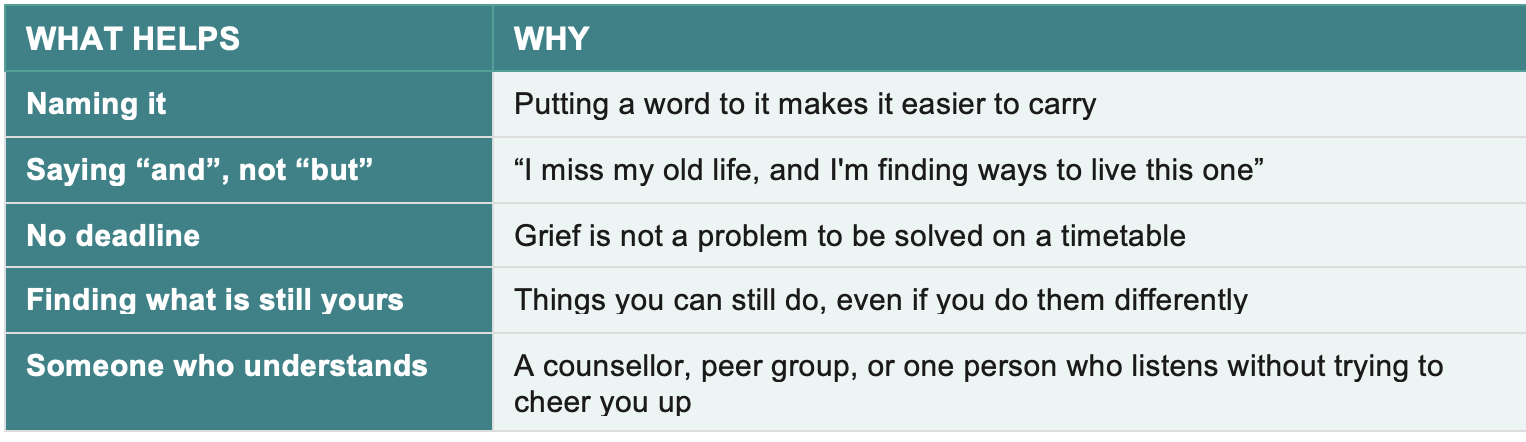
This week, finish this sentence out loud to one person: “Since my diagnosis, I miss…” You don't have to fix it or explain it. Naming a loss is often what makes it a little easier to carry.
The bottom line
You are not weak and you are not ungrateful. You are grieving something real, and you don't have to do it alone.
📋 Free downloads: 📋 Heart Failure Tracking Kit (free): https://www.hftk.drjodieannsenior.com 📋 Heart Failure Stage Guide (free): https://www.hfsg.drjodieannsenior.com 💬 Heart Failure Collective (paid membership): https://members.drjodieannsenior.com/heart-collective-1 ▶️ Watch the video version: 📖 More: drjodieannsenior.com/blog |
Aligned with the NHFA/CSANZ 2018 Guidelines for the Prevention, Detection and Management of Heart Failure in Australia.
This article is general education and not a substitute for personal medical advice. If you are in crisis, call 000 (Australia), Lifeline 13 11 14, or your local emergency or crisis service.
Heart Failure Help Now|drjodieannsenior.com|Dr Jodie-Ann Senior, Heart Failure Specialist