I'm Depressed Since My Heart Failure Diagnosis. Is That Normal?
I'm Depressed Since My Heart Failure Diagnosis. Is That Normal?
By Dr Jodie-Ann Senior | Cardiologist & Heart Failure Specialist
If you've felt sad, flat or withdrawn since being diagnosed with heart failure, you may be wondering whether that's normal, or something to worry about? Firstly, if this is the case for you or someone you care about, I am truly sorry for your pain. Heart failure can feel like a devastating change to your life or those you love. Feeling sad, angry, depressed or just low is very common and it is not a sign of weakness. Second, it is important to speak up because it is treatable. This guide explains why it happens, how to tell low mood from heart failure symptoms, and what to ask for.
How common is depression in heart failure?
Research suggests that roughly one in five people living with heart failure experience depression, and many more experience low mood or anxiety that doesn't meet the formal threshold for a diagnosis. It is one of the most common and most under-recognised parts of living with heart failure.
Why does heart failure affect your mood?
A heart failure diagnosis can change your energy, your independence, your plans and your sense of who you are, often all at once. You are asked to take on new medications, new routines and new fears, usually after very little time to process any of it. Low mood is a very understandable response.
You could try and think of it a nit like this - a heavy backpack you didn't pack, got handed to you with the instruction that you'll be carrying it up every hill from now on, indefinitely. Fear, tablets, appointments, tiredness and worry for your family are all inside. Feeling worn down under that weight is not weakness. It is what a heavy load does to anyone.
But
The load can be lightened, unpacked and shared.
Low mood or heart failure symptoms? Why it gets missed
Many symptoms of depression and heart failure overlap, so one is often mistaken for the other. Both can be present at once.
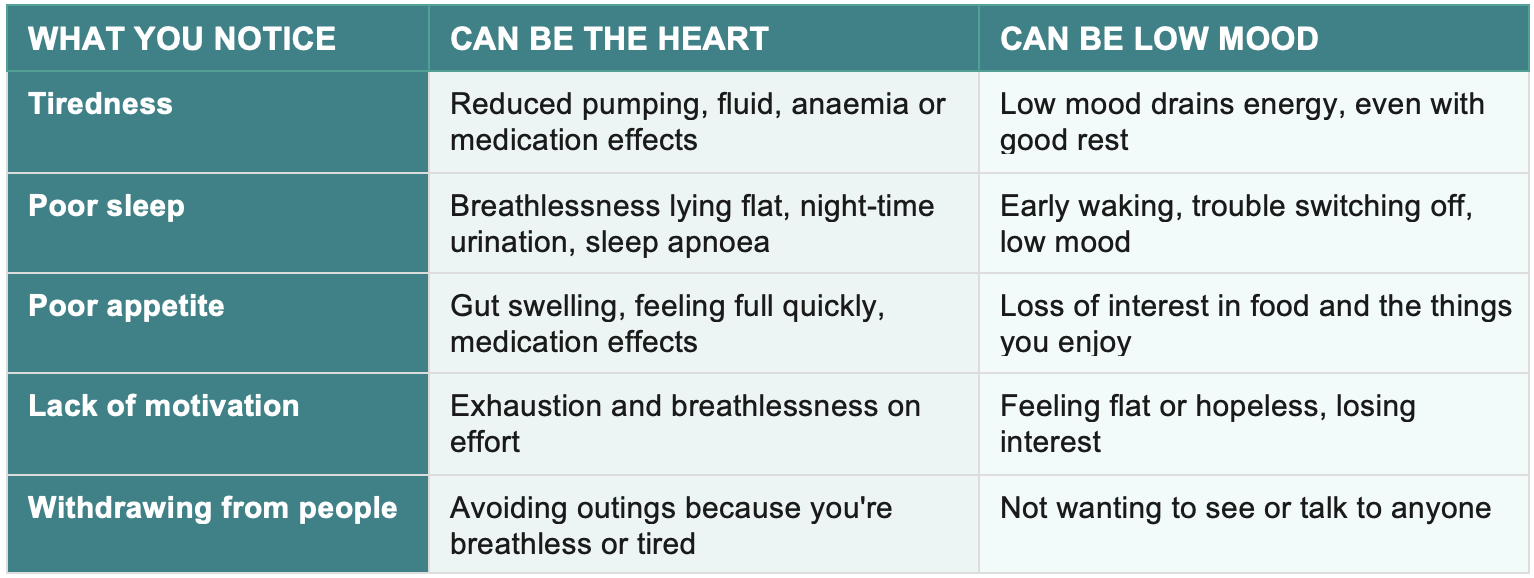
Why your mood matters for your heart
When mood is low, it becomes harder to take medications consistently, to follow your fluid and weight-monitoring plan, to stay active and to attend appointments. Depression in heart failure has also been linked with more hospital admissions and poorer outcomes. Looking after your mood is part of looking after your heart.
When to seek help
It's worth raising with your GP or cardiologist if you have:
•Felt low most days for two weeks or more
•Lost interest in things you used to enjoy
•Been withdrawing from family and friends
•Slept far more or far less than your breathing can explain
•Felt hopeless, or started missing your medications
If you are having thoughts of ending your life, please tell someone today. Australia: 000 in an emergency|Lifeline 13 11 14|Beyond Blue 1300 22 4636 United States: call or text 988|UK and Ireland: Samaritans 116 123 |
What helps
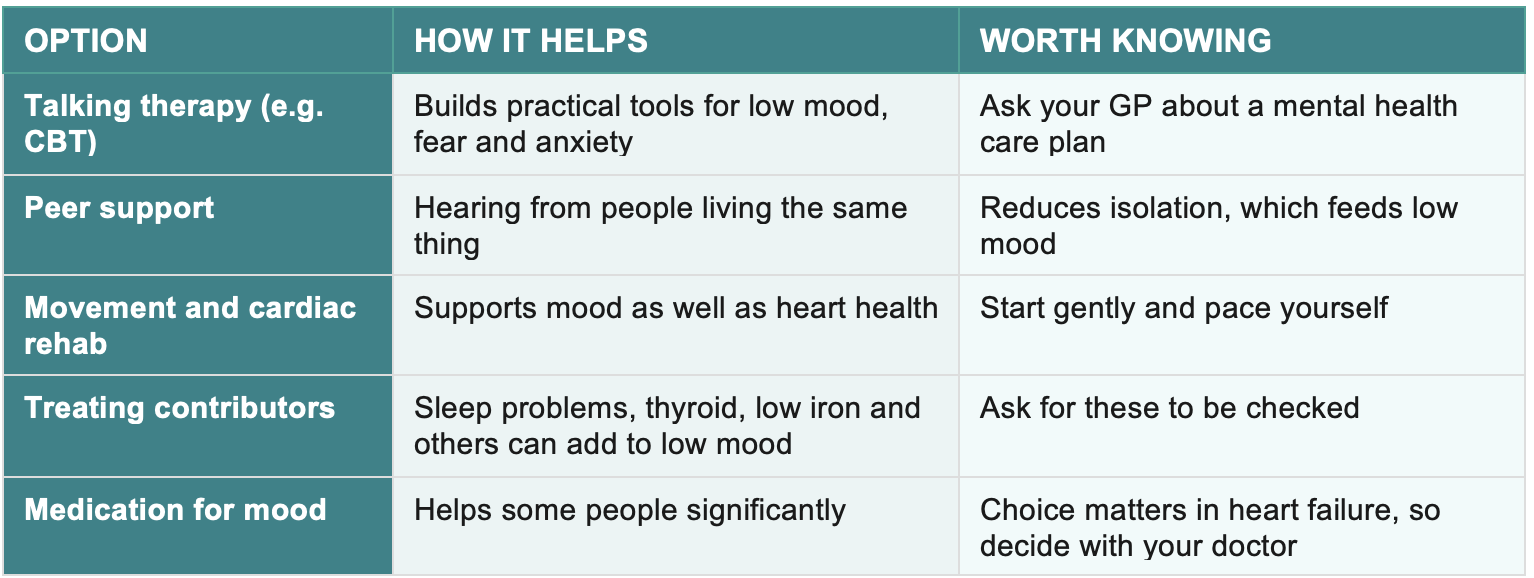
The one thing to do
At your next appointment, say this to your GP or cardiologist: “Since my diagnosis I haven't felt like myself, and I'd like to be checked for low mood.” Write it down beforehand, or bring someone to say it with you. That one sentence opens the door to all the help above.
If you use a tracker for your daily heart failure checks, add a quick mood score out of ten. It gives you and your doctor something concrete to look at together.
The bottom line
Feeling flat since your diagnosis is common, understandable and treatable. You are not weak, and you do not have to carry it quietly.
📋 Free downloads: 📋 Heart Failure Tracking Kit (free): https://www.hftk.drjodieannsenior.com 📋 Heart Failure Stage Guide (free): https://www.hfsg.drjodieannsenior.com ▶️ Watch the video version: 📖 More: drjodieannsenior.com/blog |
Aligned with the NHFA/CSANZ 2018 Guidelines for the Prevention, Detection and Management of Heart Failure in Australia.
This article is general education and not a substitute for personal medical advice. If you are in crisis, call 000 (Australia), Lifeline 13 11 14, or your local emergency or crisis service.
Heart Failure Help Now|drjodieannsenior.com|Dr Jodie-Ann Senior, Heart Failure Specialist